Rent deposit in Geneva: getting it back after your move
Your rent deposit (garantie de loyer) is held in a bank account in your name. The bank releases it with the property manager’s agreement, usually after the move-out inspection, or at your request if no claim has been brought against you within a year of the end of the lease. The property manager can only deduct damage beyond normal wear and tear, and rent or charges you owe. Here is how to avoid deductions and what to do if it blocks the release.

How the deposit works
- It is in your name. A cash deposit must be paid into a savings or deposit account in the tenant’s name at a bank. It does not sit in the property manager’s account.
- It cannot exceed three months’ rent for a home.
- The bank only releases it in three cases: with both parties’ agreement, on an unopposed payment order, or on an enforceable judgment.
- After one year, if the landlord has brought no claim against you in court or through debt collection since the lease ended, you can require the bank to pay it back to you.
In most cases, everything is decided at the move-out inspection: hand back a clean flat with no defects and the property manager signs the release.
What can and cannot be deducted
| Can be deducted | Cannot be deducted |
|---|---|
| Insufficient cleaning (cleaning is your job) | Normal wear and tear: slightly yellowed walls, worn parquet, furniture marks |
| Small upkeep left undone, such as filling plug holes | Repainting the whole flat because you hung pictures |
| Damage beyond normal use, at its remaining value only | The cost of brand-new items to replace old ones |
| Missing keys (lock cylinder change) | A defect already listed in the move-in inspection |
| Things left in the flat, cellar or attic | A defect reported too late, several days after you handed back the keys |
| Unpaid rent and the balance of the service charges | A lump sum agreed before the inspection (such an agreement is void) |
Remaining value. Even for real damage, you only pay what the item was still worth. ASLOCA Geneva quotes the joint lifespan tables: about 8 years for emulsion paint, 10 years for parquet or wallpaper. ASLOCA’s example: wallpaper that was new when you moved in and is damaged after 8 years costs you only about 20% of the repair. After 10 years in a flat with no work done, paint and parquet are in principle fully written off.
Holes in the walls. Hanging pictures is normal use. You only need to fill the holes neatly; the property manager cannot charge you for repainting because of them.
Service charges. If your lease has advance payments for charges (heating, hot water), the property manager may wait for the annual statement to settle the account. In that case, ask it to release the rest of the deposit straight away and keep only an amount in line with the expected balance.
Avoiding deductions: the checklist before handing back the keys
- Go back to the move-in inspection: anything already listed there cannot be held against you.
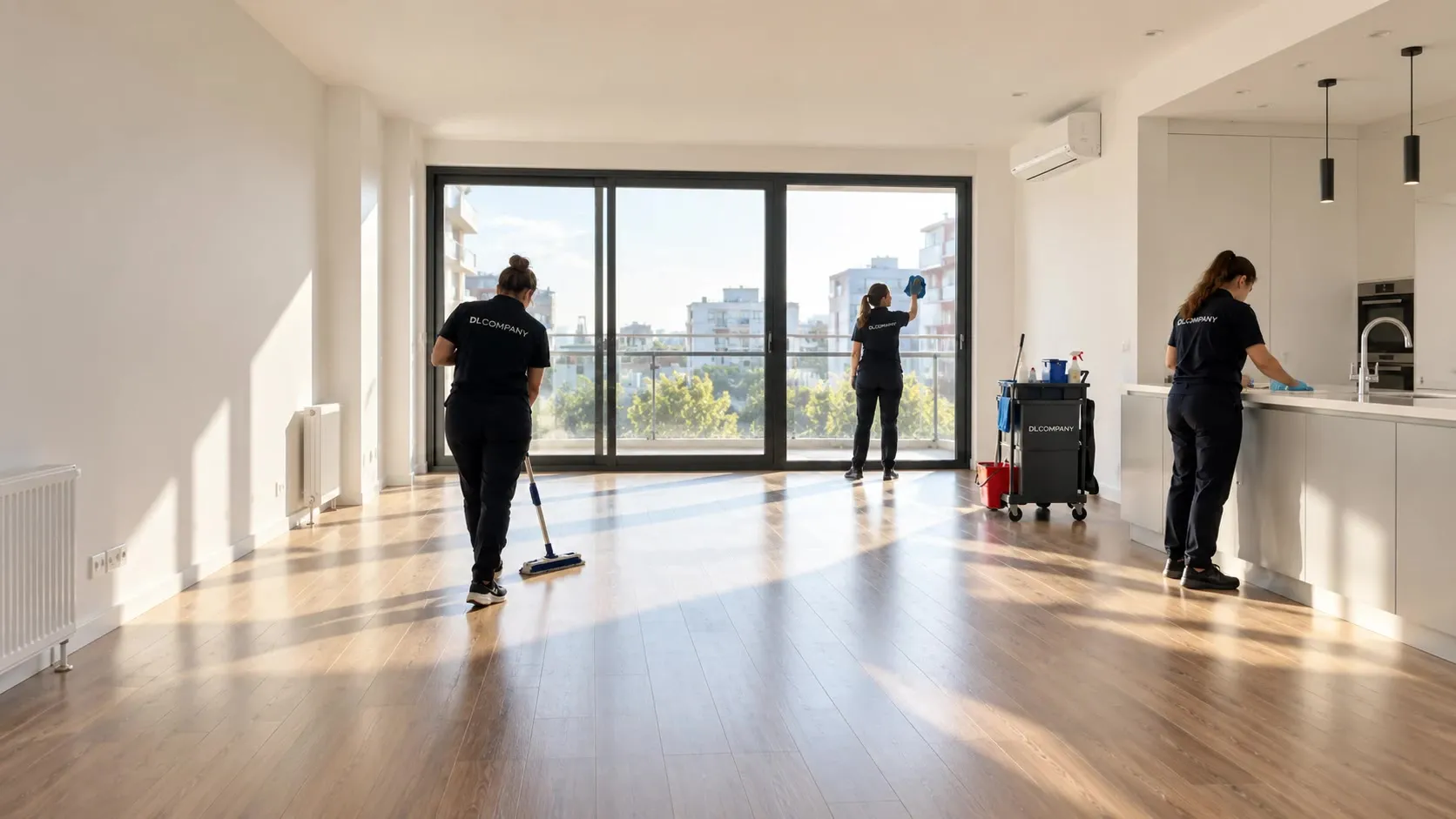
- Clean thoroughly, especially the kitchen (hood, filters, oven, fridge), limescale in the bathroom, windows, frames and blinds. It is the number one reason for deductions. Our end of tenancy cleaning comes with a handover guarantee: if the property manager raises a point on the cleaning, we come back and fix it free of charge.
- Fill plug holes and put the original lighting back.
- Empty everything, cellar and attic included. For what you are not taking, there is our house clearance.
- Return every key, letterbox and cellar included.
- Photograph each room just before the inspection.
The room-by-room detail is in our move-out inspection guide for Geneva.
On inspection day: what you sign
- Be there, or send someone, to discuss each point on the spot.
- Read what you sign. On a tablet it is not always clear. A document that mentions an amount to pay may be an acknowledgment of debt: ASLOCA Geneva describes a tenant who signed for about CHF 1,300 of cleaning and locksmith costs this way.
- If you disagree, add a reservation next to your signature, for example: “My signature does not acknowledge liability for the disputed defects.”
- A lump sum agreed during the inspection is allowed and can speed up the release of the deposit. A lump sum set before the inspection, for example in the lease, is void.
- The property manager must report defects straight away, at the inspection or within the following days. Otherwise you are no longer liable, except for defects that a normal check could not reveal.
If the property manager does not release the deposit
- Write to the property manager by registered letter: ask it to sign the release at the bank by a set date, for example within 10 days.
- Apply to the Conciliation Commission for tenancy matters (Commission de conciliation en matière de baux et loyers) if nothing happens or the deductions seem unjustified. Conciliation in tenancy cases is free, and you can go without a lawyer.
- Or wait one year: if no debt collection or court case has been brought against you within a year of the end of the lease, you can claim the deposit directly from the bank.
If you are unsure about a deduction, ASLOCA Geneva can advise you.
The mistakes we see most often
- Handing back a flat that is “almost clean”: the hood, oven, limescale and windows are enough to justify a cleaning deduction.
- Forgetting the cellar, or leaving furniture “for the next tenant”.
- Signing on the tablet without reading, or without noting a reservation.
- Agreeing to pay the full new price for paint or carpet that was already several years old.
- Not chasing the property manager after the inspection: without its signature, the bank releases nothing.
Getting ready to leave? We handle the move, the clearance and the end of tenancy cleaning, so you can hand back the keys with peace of mind.